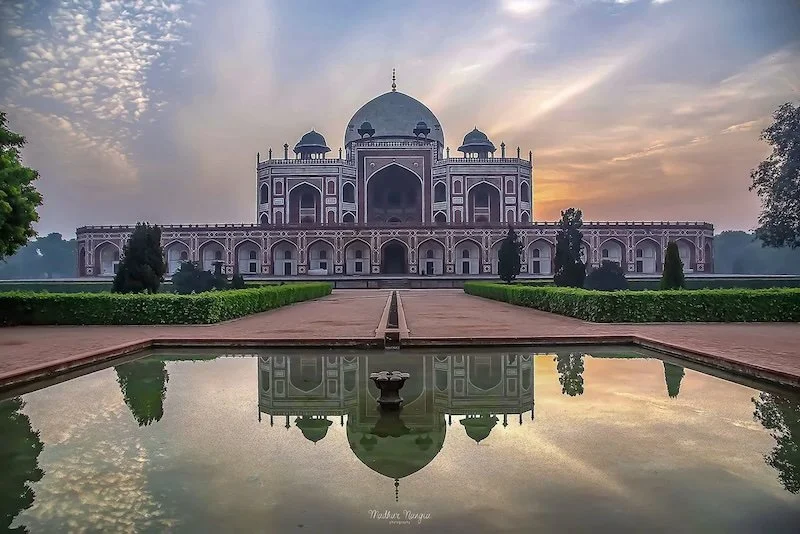
Humayun's Tomb, A Frame at Every Turn
Delhi did not grow on me. It ambushed me.
I wasn't born in Delhi. Delhi was gifted to me, when a sudden medical emergency in the family brought me here. I had visited the city many times, but the city I visited suddenly became the city I lived in. It became my home.
Mumbai grows on you slowly. Delhi is spontaneous, like a flashbulb going off in your face. You either like Delhi or you hate it. I don't just like it, I love it.
My journey as a photographer started right here, in the heart of Delhi, at Humayun's Tomb. That is why Humayun's Tomb photography will always be my first love.
Humayun's Tomb , A classroom with no walls
Empress Bega Begum, Humayun's widow, built this tomb in memory of the emperor. The work began around 1565 . Its Persian style later inspired the Taj Mahal, which came about eighty years after. So the Taj is the famous student and this tomb is the quiet teacher.
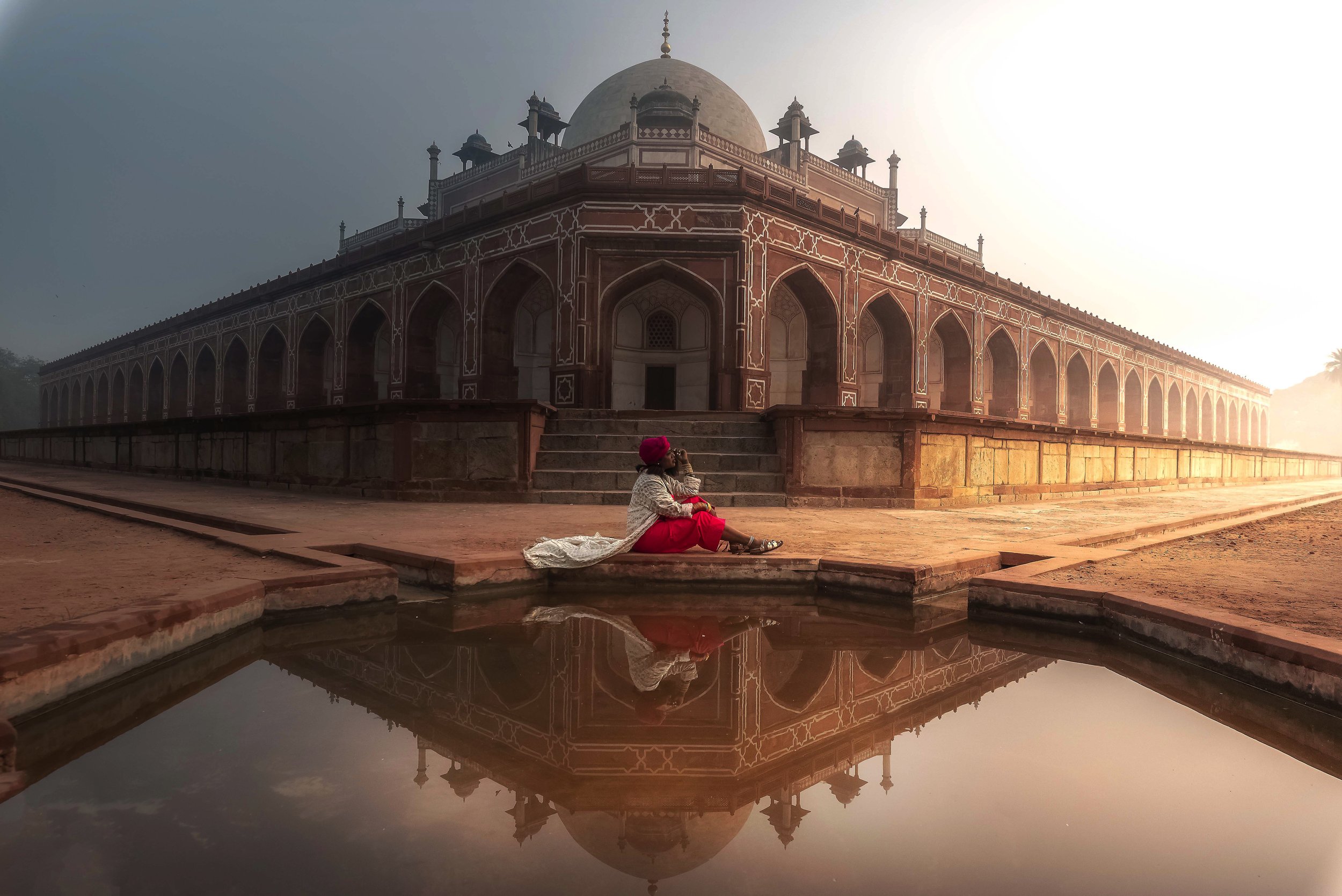
As a photographer, I believe this monument was made for photographers. Every corner is a frame in itself. It is a classroom for beginners who want to learn photography, and a gym for seasoned photographers who want to sharpen their skills.
It also works for people who want timeless portraits while visiting the capital or a frame for a special milestone in their life or just some casual frames to keep as memories.
Start at Isa Khan's tomb
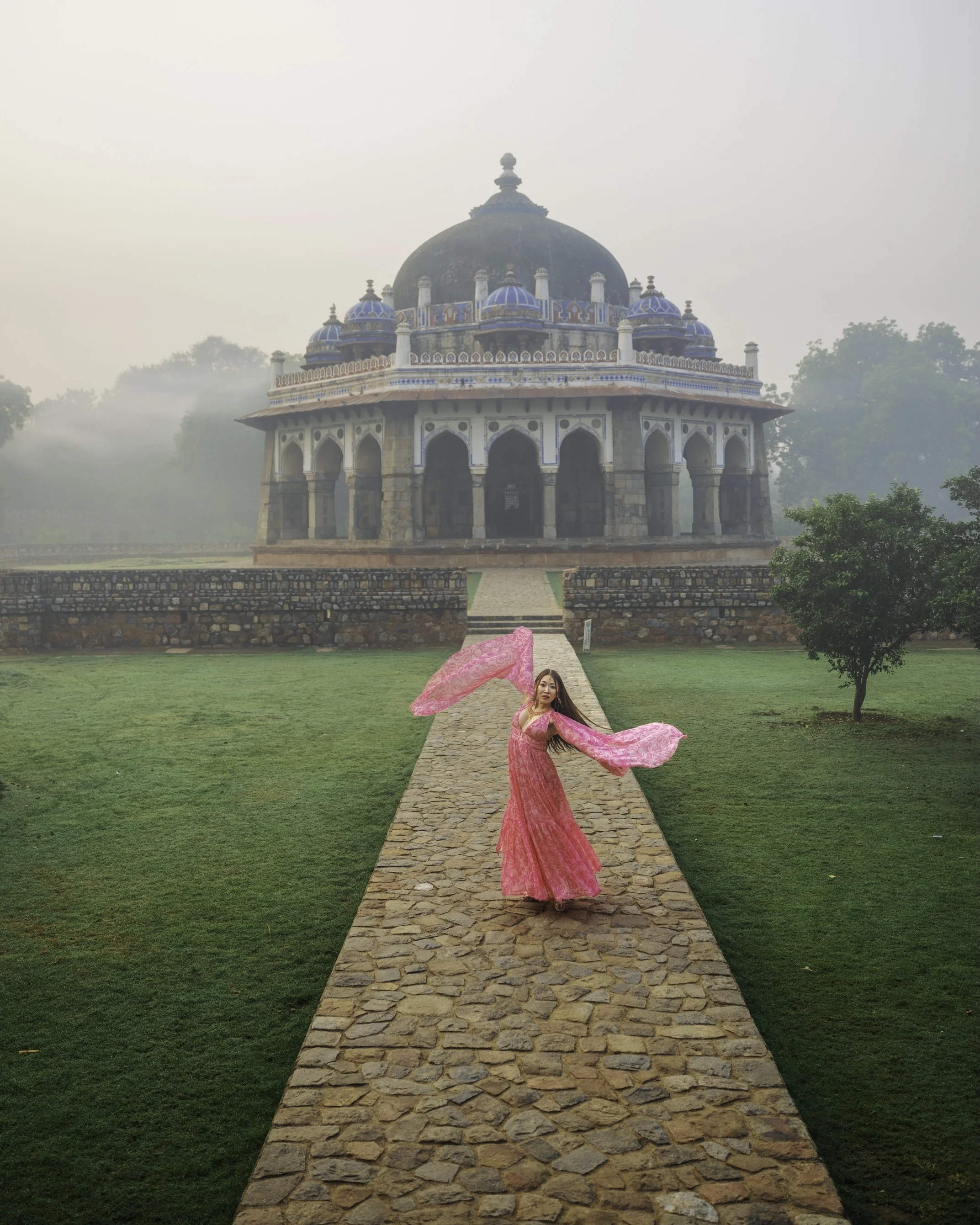
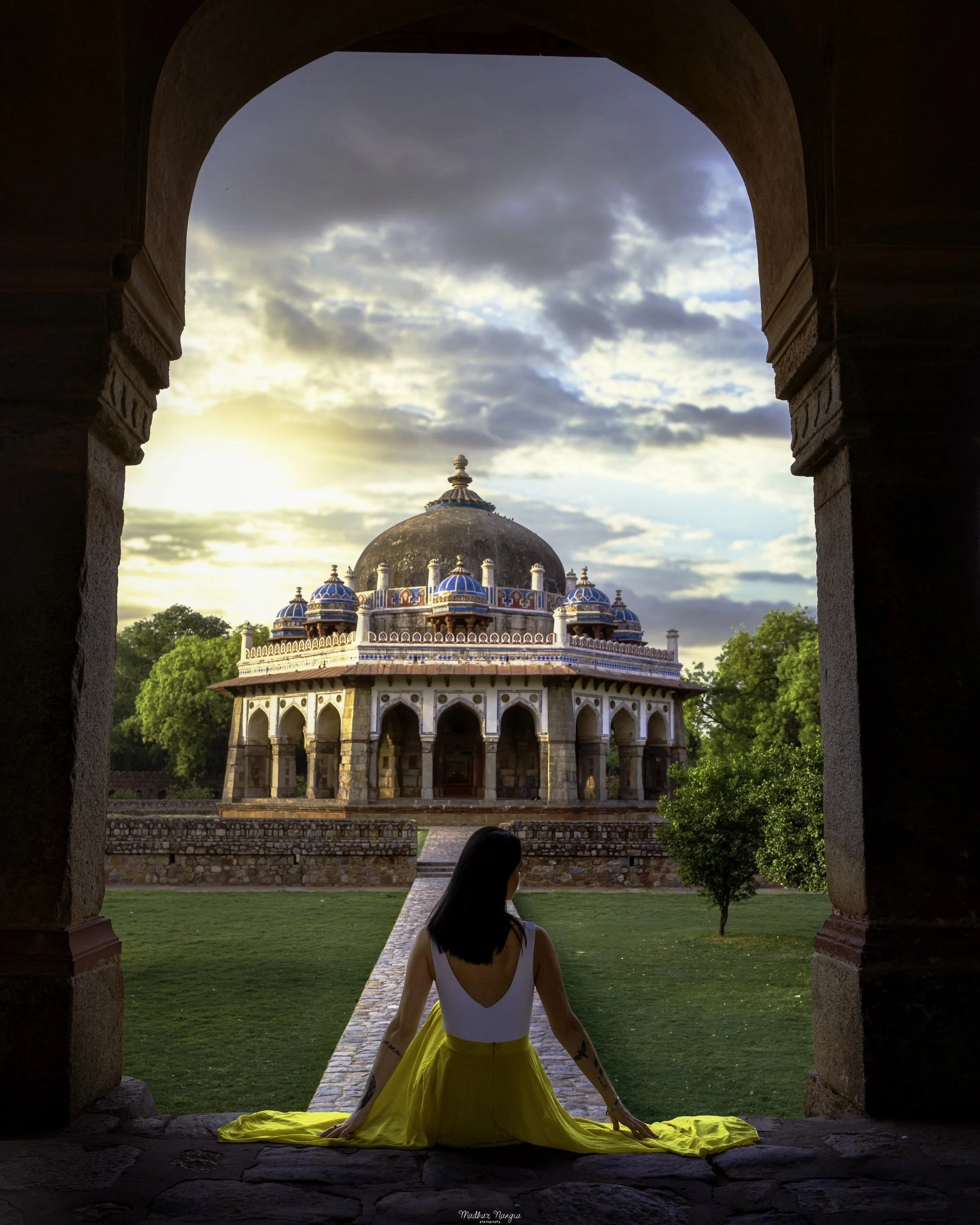
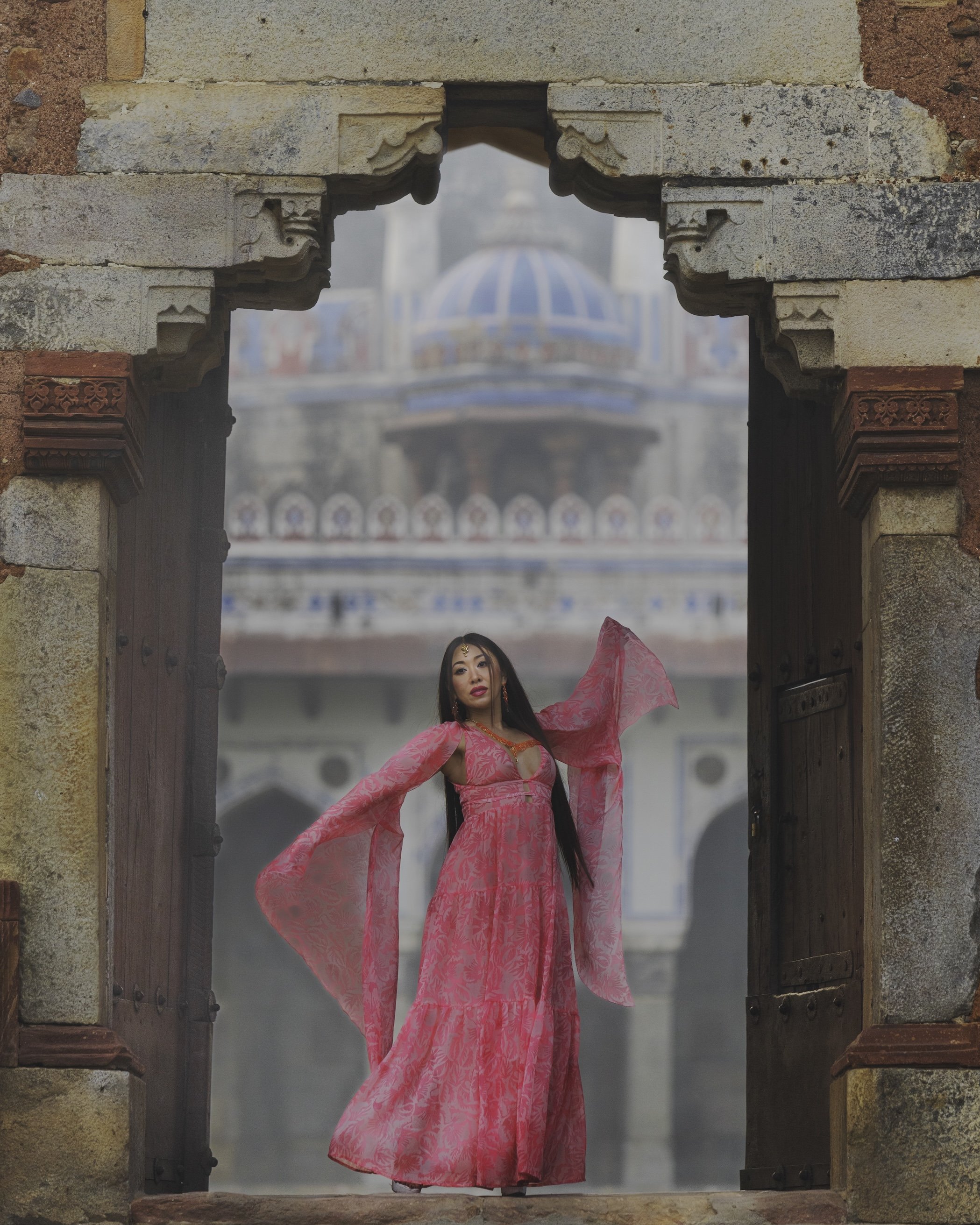
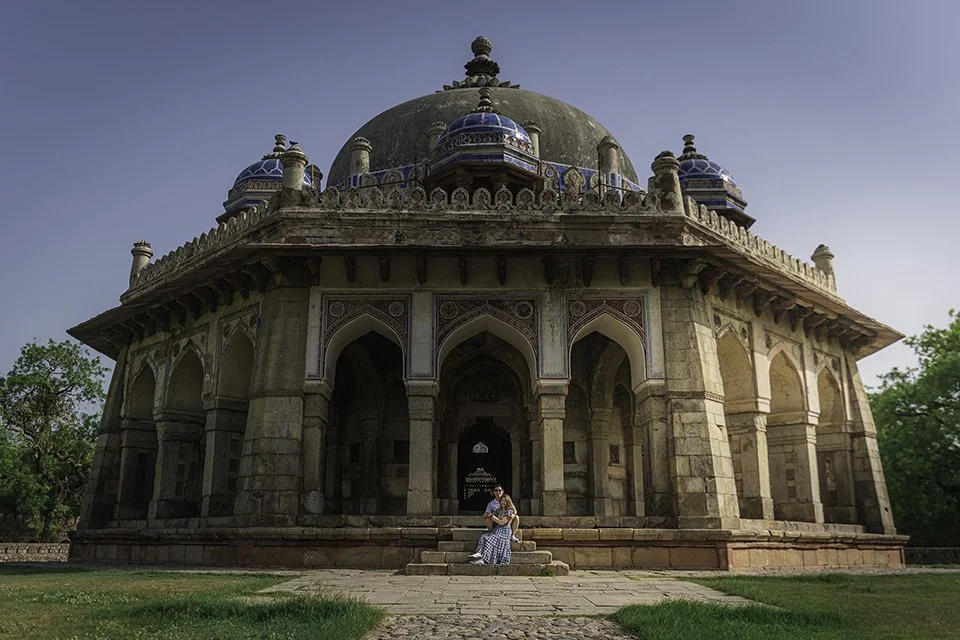
Your walk begins at the ticket counter. From there, a grand red stone arch gives you your first taste of the beauty and history of the Mughal era. Then a short alley leads you to a perfectly symmetrical octagonal structure, Isa Khan's tomb.
Here is a twist: this tomb is not Mughal at all. Isa Khan Niazi was a noble in the courts of Sher Shah Suri and his son Islam Shah. He built his own tomb in 1547 and 1548, while he was still alive.
The tomb stands inside an octagonal wall and pillars hold up the verandah around it. Inside lie the graves of Isa Khan and his family . The walls are made of red stone and marble, and the carved stone lattice windows called Jalis on every wall.
The best time to visit is sunrise in winter. The morning fog scatters the sunrays, so they slip softly through the jalis and light up the tomb. It is like the sky switched on its own softbox.
Green land spreads all around with a mosque at one end. For a photographer, that means endless chances to frame. Stand in the centre, keep your horizon straight, and let the symmetry do the work.
The long walk and the first glance
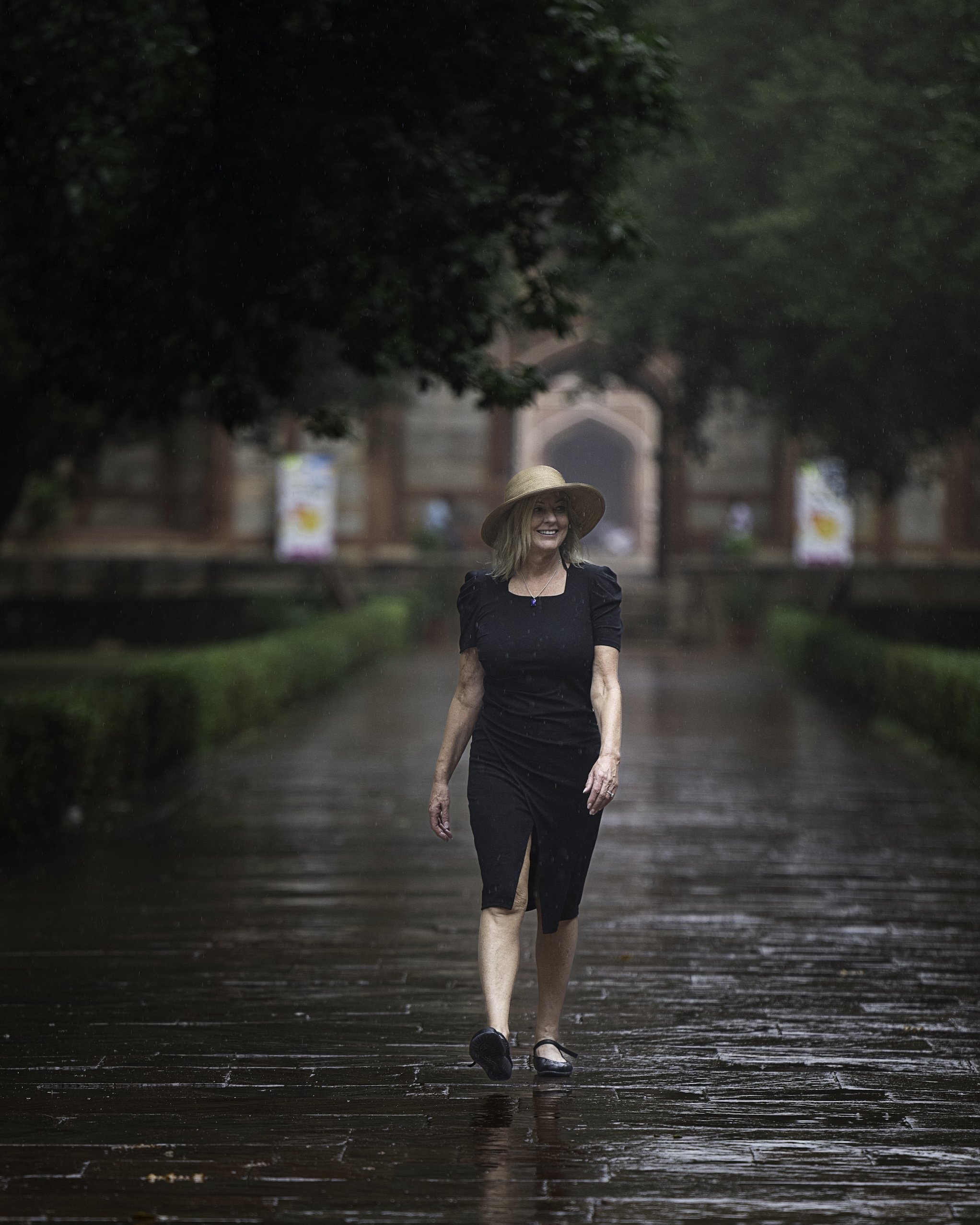

Once you step out of this enclosure, you start walking towards Humayun's Tomb. The walk feels endless, but it is worth it. Gardens and tall trees line both sides, and the path takes you straight into the Mughal era.
The main gateway is made of red and white stone. It mixes Mughal, Indian and Persian styles. Every corner looks picture perfect, and the view is as photogenic for the eyes as it is for the camera.
Walk through the huge door and you get your first glimpse of the monument . Pause under the arch before you rush ahead. The gateway is the frame and the monument is the picture.
Inside the tomb
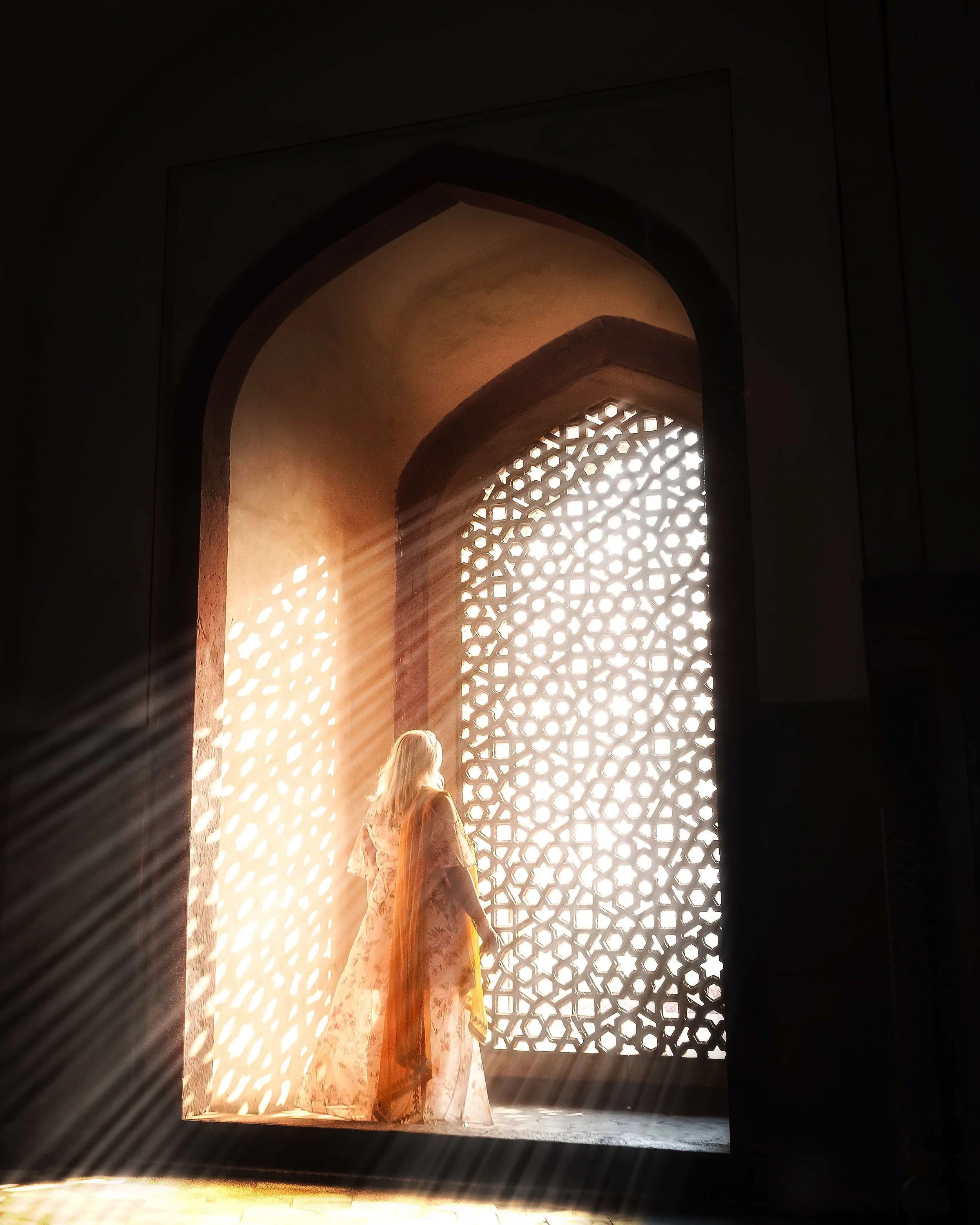

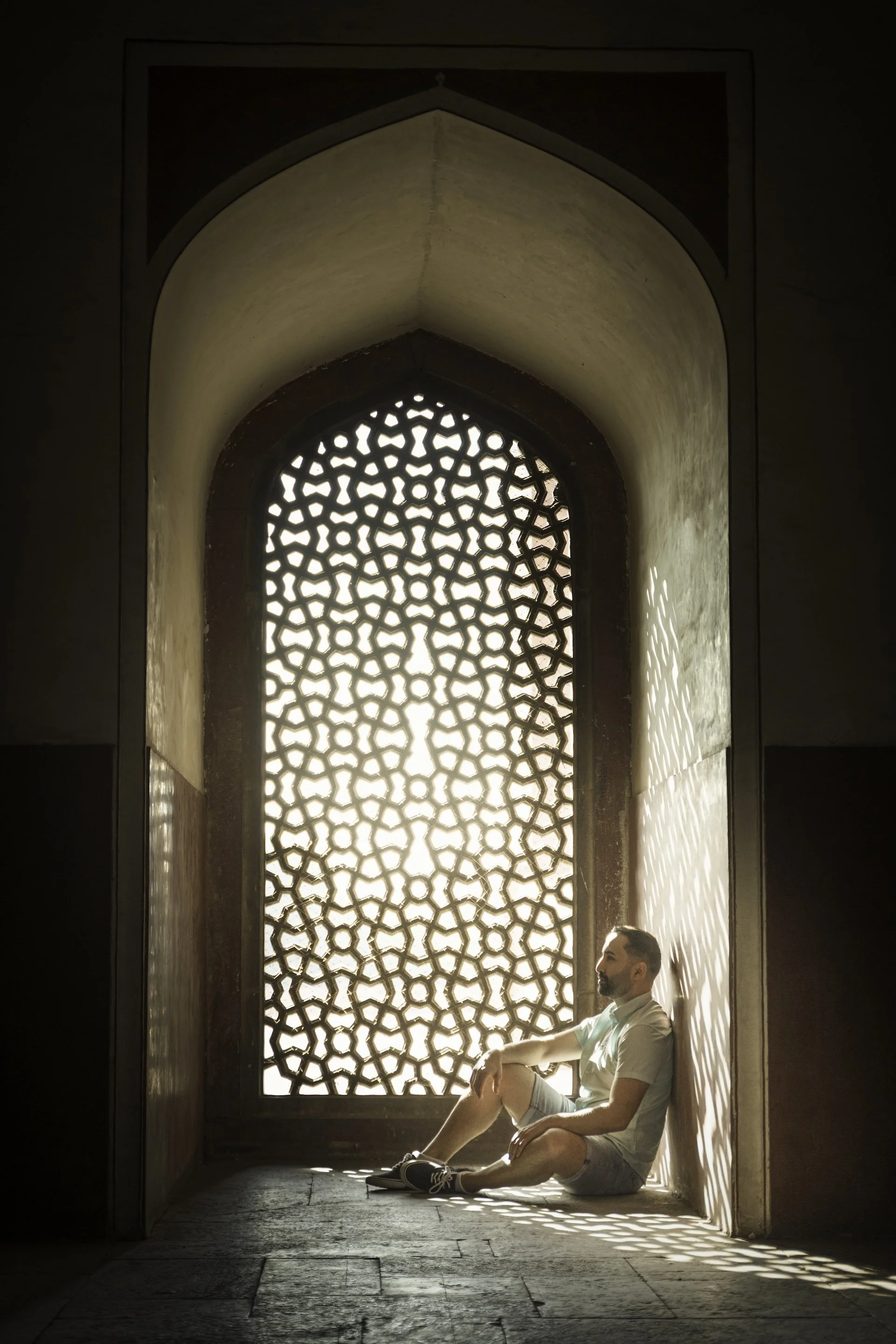
This is a double storey building of red sandstone, finished with white and black marble. It holds the grave of Humayun, along with his wives and other members of the Mughal family. In the centre lies Humayun's cenotaph, covered in white marble.
Jalis on every wall filter the sunrays coming inside. The light looks so surreal that you may forget to press the shutter. Expose for the bright patches, let the shadows stay dark, and wait for the pattern to fall on a face or a pillar.
There are other rooms and corners too, and they give you equal chances to freeze moments. Outside, the tomb is surrounded on all four sides by water channels and lush green lawns. The early morning sun adds to the whole beauty.
A quick portrait tip
Place your subject near the edge of a jali opening, facing the soft light. Don't put them in the middle of the pattern, because stripes across a face get distracting fast. Ask them to look away from the lens for one frame, because the quiet ones are often the keepers.
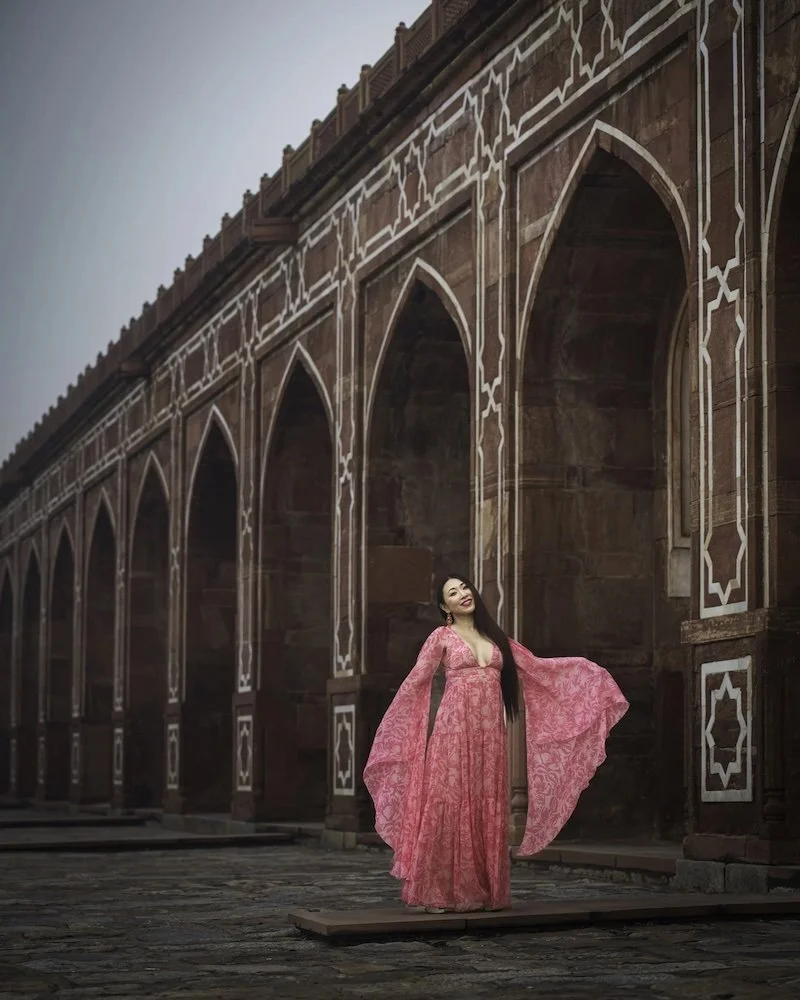
Mornings, crowds and rules
Needless to say, mornings are the best time to visit. Few people wake up with the sun, so the place is comparatively empty and you can almost have it to yourself. The early bird catches the worm, and the early photographer catches the empty frame.
But as they say, nice things don't come easy. The first hindrance is the crowd. The second is the rules: tripods need prior ASI permission, and flash may also be a problem . Commercial shoots with multiple pieces of equipment are not allowed without written permission.
That leaves you with just your camera and you. A sweet setback, really. Without a tripod, you have to move your feet, and that is the cheapest way to improve your composition.
Before you go
Tickets Cheap [50 INR for Indians and 600 for foreigners]
Best season Winter
A visit to Delhi is not complete without a visit to Humayun's Tomb.
Visiting Delhi and looking for a photography experience? Let me know, and I will be more than happy to help.