Golden Triangle Photography Workshop: An 8 Day Journey Through Delhi, Jaipur & Agra
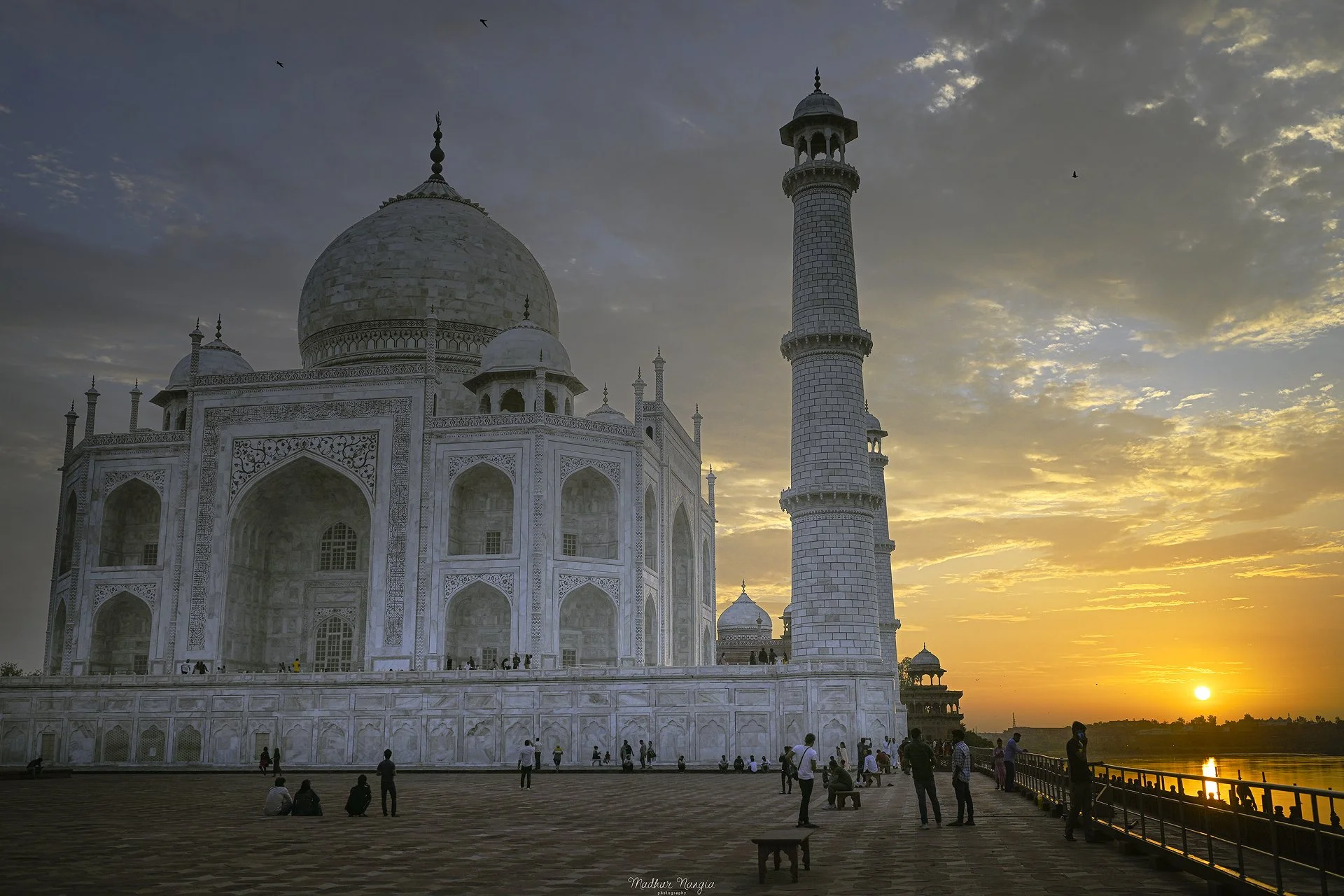
@ Taj mahal
January 2025 marked one of my most memorable photography workshop,an 8 day journey through India's Golden Triangle that coincided with something truly special. As a photographer , who's spent nearly a decade capturing India's monuments for National Geographic and Nikon India, leading this workshop through Delhi, Jaipur, and Agra in winter revealed the region in ways that still surprise me.
The timing was intentional. January offers clear skies, gentle light, and comfortable temperatures perfect for heritage photography in India. During my years conducting photography tours, I've learned winter is when the Golden Triangle truly shines. We started in Jaipur, moved to Agra, and finished in Delhi, positioning us perfectly for January 14th's Kite Festival.


Days 1 Jaipur - The Pink City
We departed Delhi at 8 AM on January 12th, reaching Jaipur by early afternoon. After settling in, our first shoot was Hawa Mahal at golden hour. The essential lesson hit immediately ,how do you photograph something captured a million times and make it yours? I typically carry my Nikon Z9 with a 24-70mm, but encouraged participants to experiment with angles. One photographer isolated just three of Hawa Mahal's 953 windows with evening light streaming through …Suddenly, the Palace of Winds became an intimate study in geometry and shadow.
Day 2 - Sunrise to Sunset
Day two began at City Palace when the gates opened at 9:30 AM. We photographed all four entrance gates before the crowds arrived, then moved upstairs to the three rooms that define royal Jaipur: Sukh Niwas with its blue tiled cooling system, Rang Mandir's mirror work catching winter light, and Shobha Niwas where gold detailing creates natural reflectors. In the courtyards, we worked on portrait photography ,participants learning how Rajasthani architecture frames human subjects naturally.
That evening at Chokhi Dhani, we practiced cultural photography ethics. During my six-month showcase at Alliance Française de Delhi, I learned to approach cultural subjects with respect. We documented traditional performances and crafts, asking permission and waiting for natural moments rather than staged poses.
Day 3 - Jaipur's Kite Festival & Fireworks
This was the day I'd planned for months. January 14th brings Makar Sankranti, and Jaipur's International Kite Festival transforms the sky into a moving canvas of color.
We returned to Hawa Mahal early, securing positions before the crowds. From morning through afternoon, thousands of kites filled the sky above the Pink City, reds, yellows, blues, greens, all against Rajasthan's perfect winter clarity. The Jaipur Kite Festival photography opportunity is unlike anything else. I insisted fast shutter speeds to freeze kites mid flight and longer exposures for motion blur conveying the chaos and energy.
But the evening brought something unprecedented. For the first time ever, fireworks exploded above Hawa Mahal during the Kite Festival. We'd positioned ourselves perfectly for this historic moment and suddenly we weren't just documenting a traditional festival, we were capturing photographic history.
The combination was surreal ! illuminated kites still dancing in the twilight sky, fireworks bursting overhead, and Hawa Mahal's intricate façade catching both natural and explosive light. We went manual long exposures on tripods, experimenting with apertures to control light trails. The images created that evening were entirely unique, impossible to replicate because this display had never happened before.
Day 4: Amer Fort to Agra's Sunset
We started early at Amer Fort, arriving when the gates opened at 8 AM. Winter morning light wrapped the fort's courtyards in golden warmth, and we worked quickly before tour buses arrived. The fort's layered architecture from the Sheesh Mahal's mirror work to the geometric patterns in Ganesh Poloffers endless photographic possibilities.
Just below Amer Fort lies Panna Meena ka Kund, a stepwell that's become one of my favorite locations in Rajasthan. The symmetrical staircases create geometric patterns photographers dream about. The morning light created natural contrast and several participants captured images here .
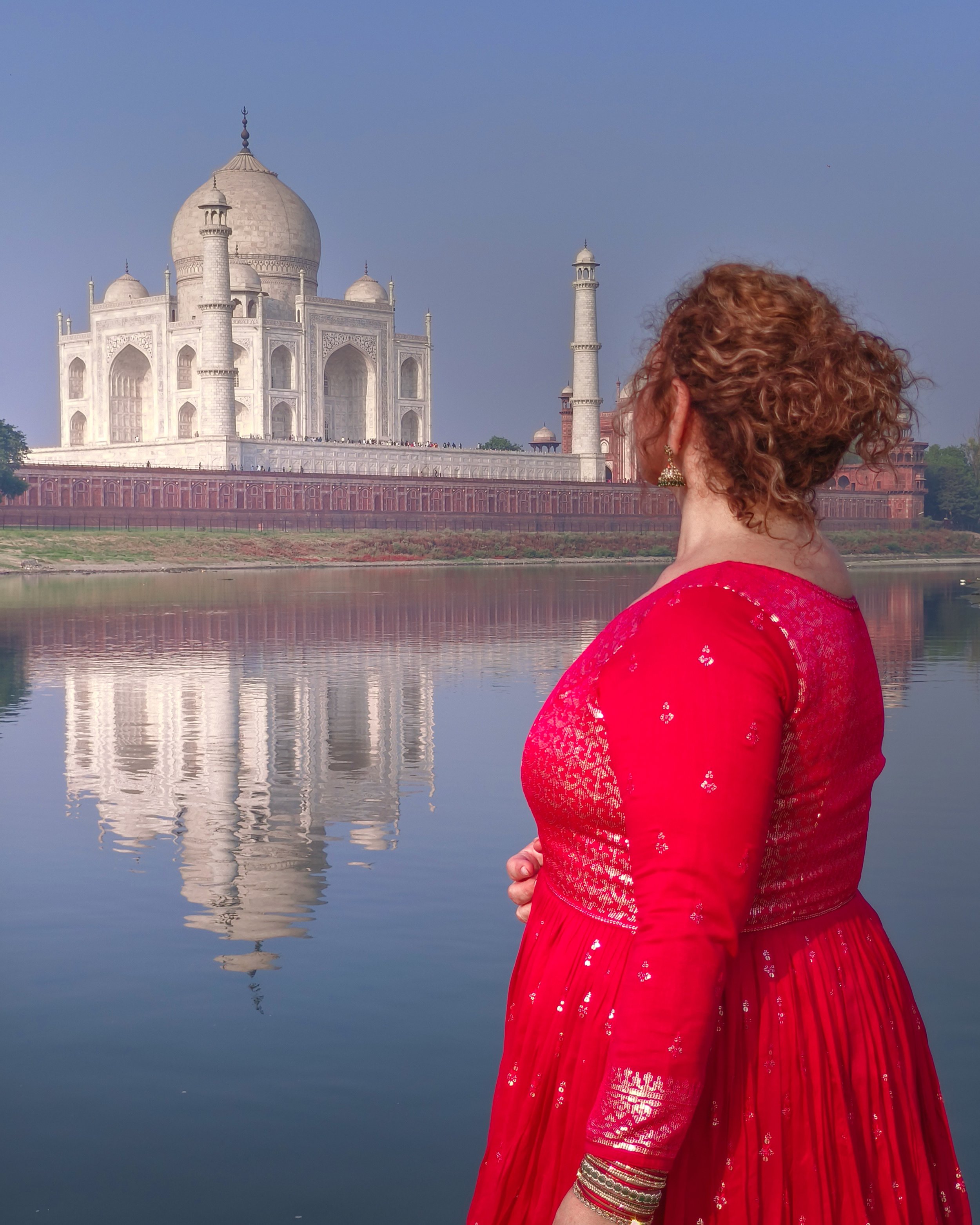
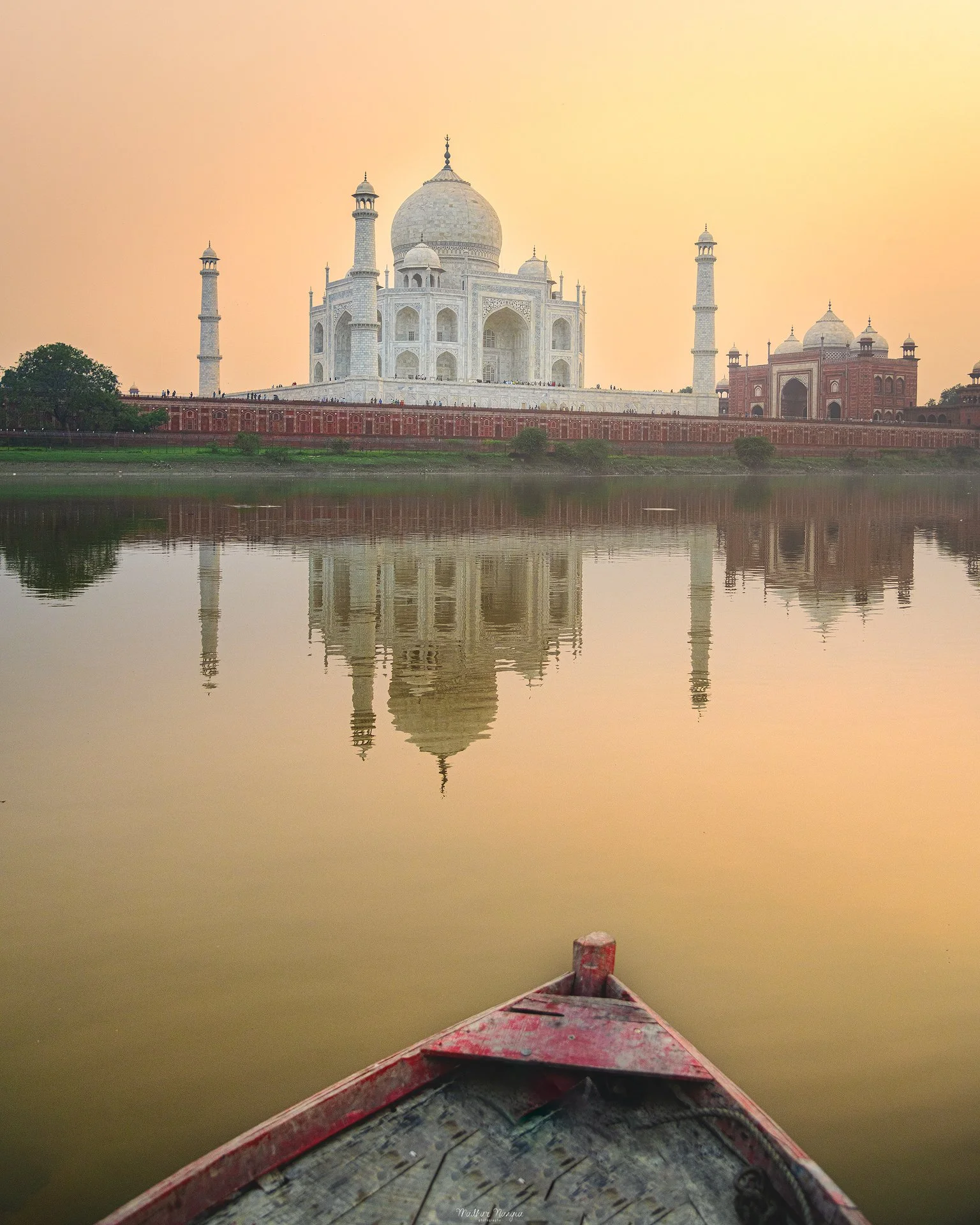
By afternoon, we were driving to Agra. The five-hour journey gave us time to review morning shots and discuss what lay ahead. We reached Agra just before sunset and headed straight to Mehtab Bagh for our first Taj Mahal view across the Yamuna River, framed by gardens, with the monument catching evening light. It's a perspective that shows the Taj in its landscape context and the perfect introduction to what morning would bring.

Day 5: Taj Mahal Sunrise & The Road to Delhi
Arriving before the Taj Mahal's sunrise opening means minimal crowds and witnessing the monument transform as dawn breaks. I learned from experience that the first and last light tells stories , midday harshness obliterates. The Taj emerged from darkness first as a silhouette, then gradually revealing its white marble glory as the sky shifted from deep blue to pink to gold.
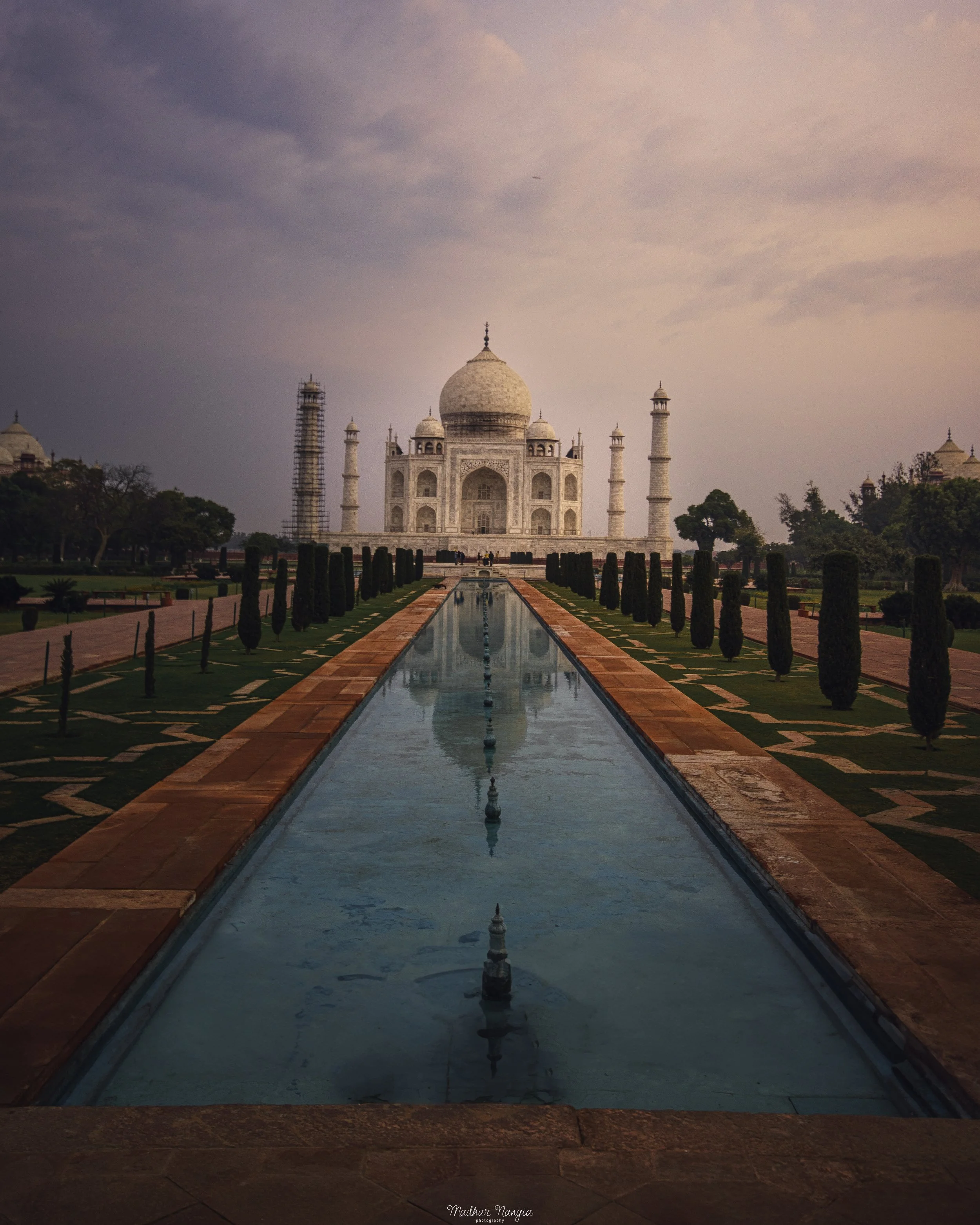
The classic reflection pool shot works because it's perfect. But I also showed alternative perspectives, shooting through archways, capturing the monument's relationship with the Yamuna River, isolating the intricate pietra dura inlay work in gentle morning light. By the time we left, participants had shot hundreds of frames, each experimenting with their own vision of this iconic monument.
After breakfast, we photographed Agra Fort, the red sandstone fortress that offers its own views of the Taj Mahal from where Shah Jahan spent his final years under house arrest. The contrast between the fort's massive defensive architecture and the delicate beauty of the Taj visible in the distance told a complete historical narrative.
By afternoon, we were on the road to Delhi for the workshop's final segment.
DAY 6
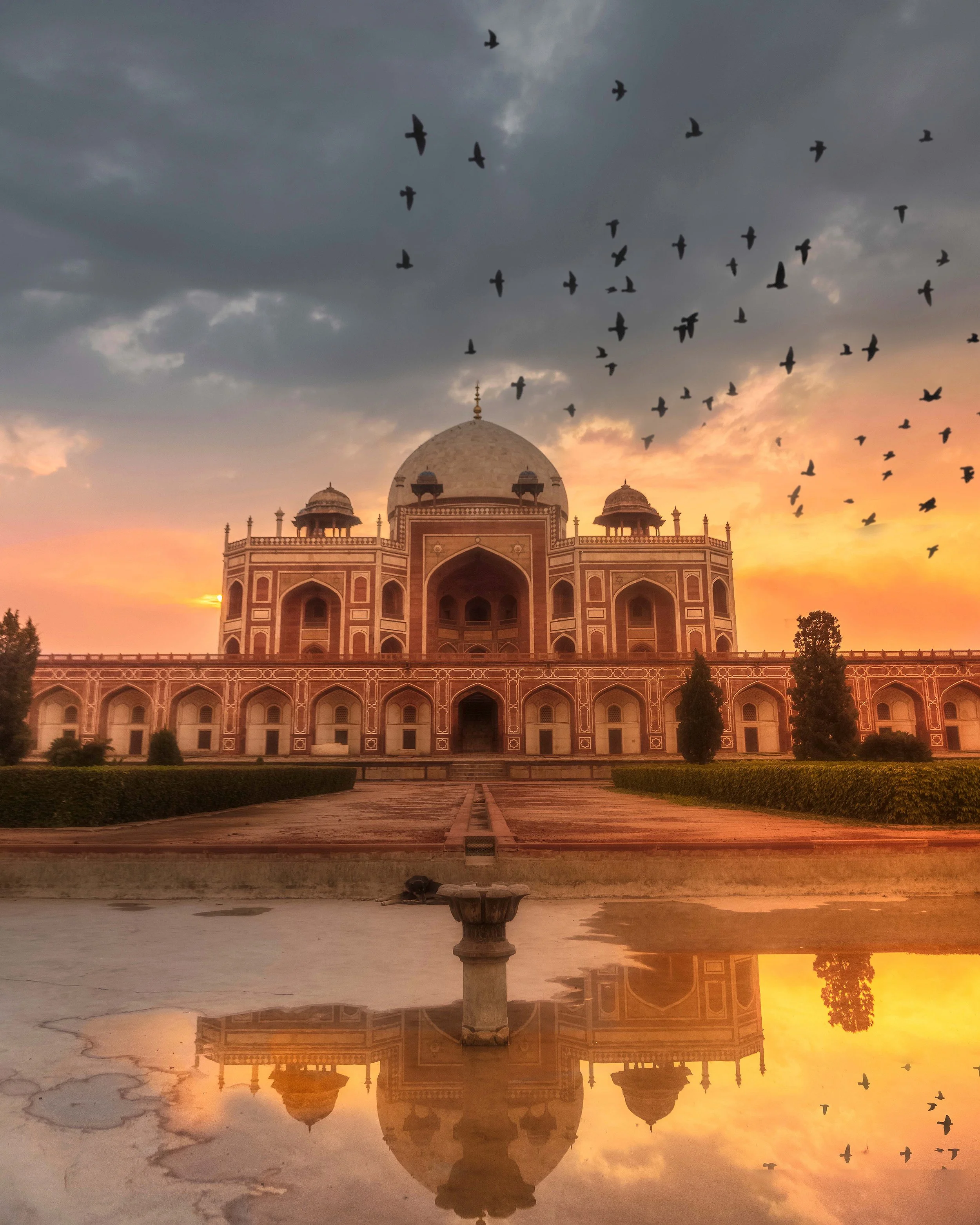
Day 6 started at Humayun's Tomb when it opened at 6 AM. This UNESCO World Heritage site is often called the predecessor to the Taj Mahal, and photographing it in early morning light revealed why. The red sandstone glowed warm in the low sun, and the char bagh gardens were still and peaceful. We worked on symmetry and reflection, using the water channels and pathways as compositional elements.
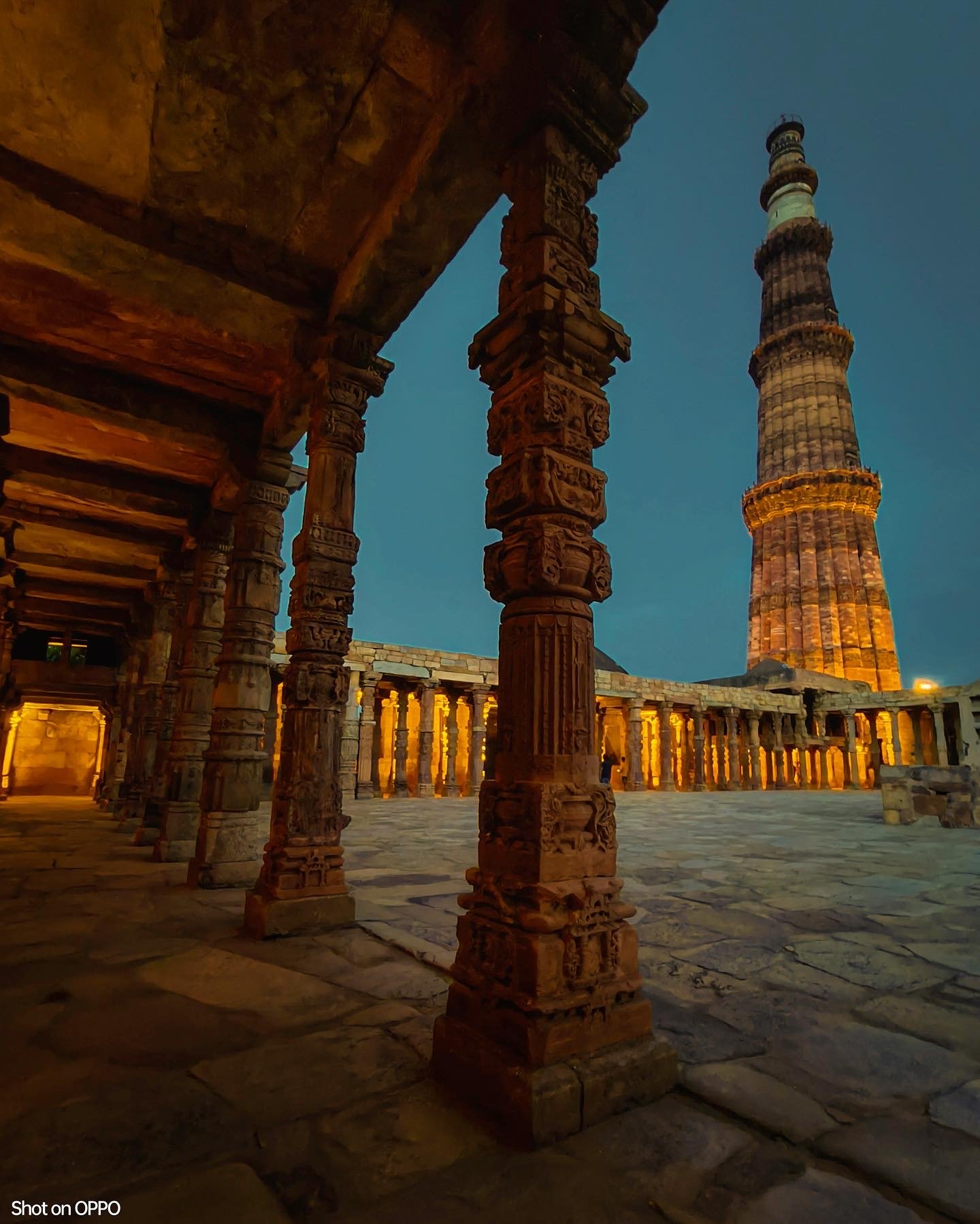
That evening brought us to Qutub Minar, where the 73 meter minaret casts dramatic shadows in late afternoon light. The Indo-Islamic architecture here is entirely different from the Mughal monuments we'd been shooting, and participants appreciated how diverse Delhi's heritage photography can be.
DAY 7
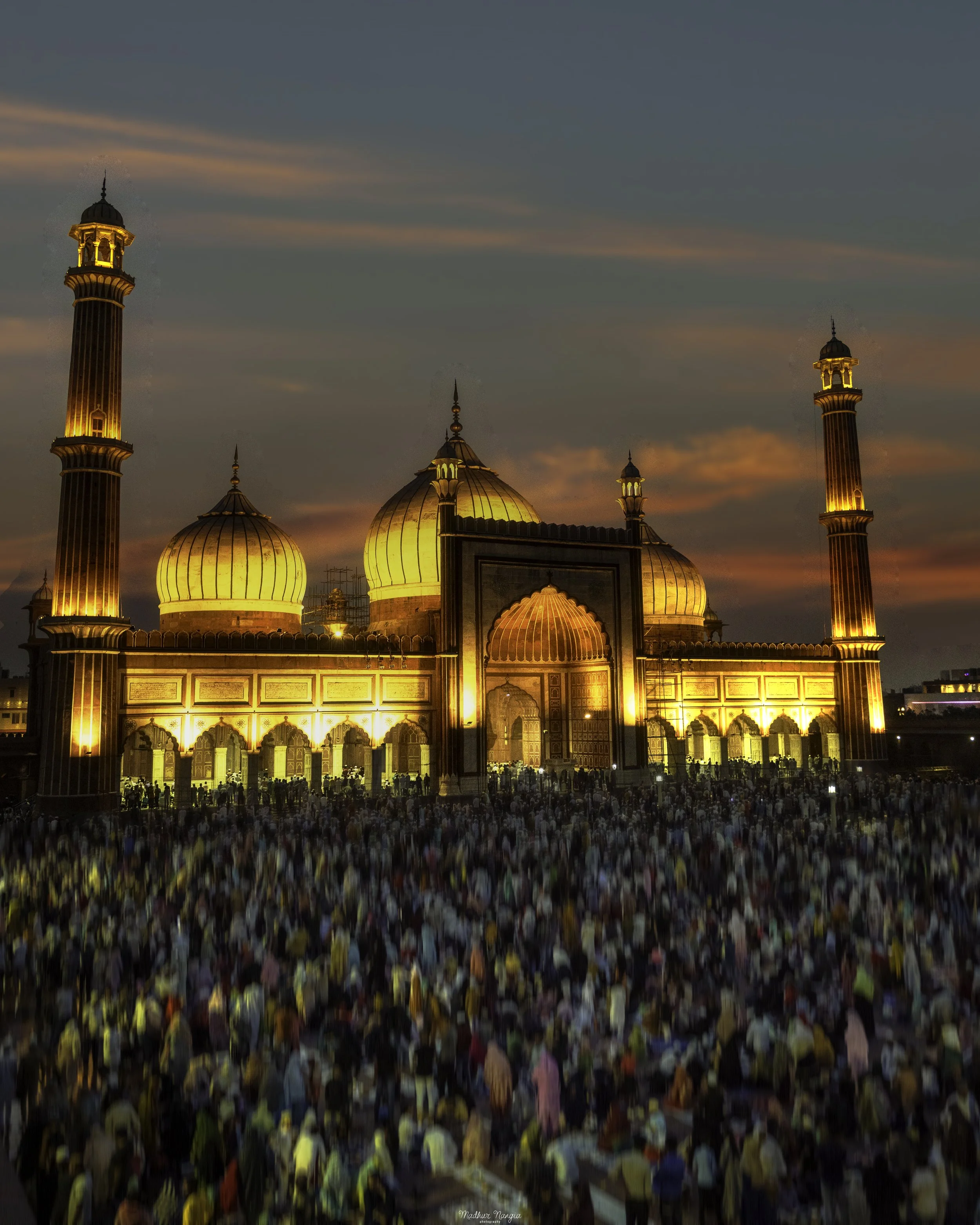
Day 7 began at Jama Masjid, one of India's largest mosques. We arrived early when morning light streams through the arches and the vast courtyard is relatively empty. From there, we ventured into Old Delhi's lanes around Chandni Chowk. Delhi street photography can overwhelm, but the key is finding stillness within chaos. In my photo tours across Delhi, I teach participants to slow down find one street vendor, one shaft of light, one moment of connection, and photograph that deeply.
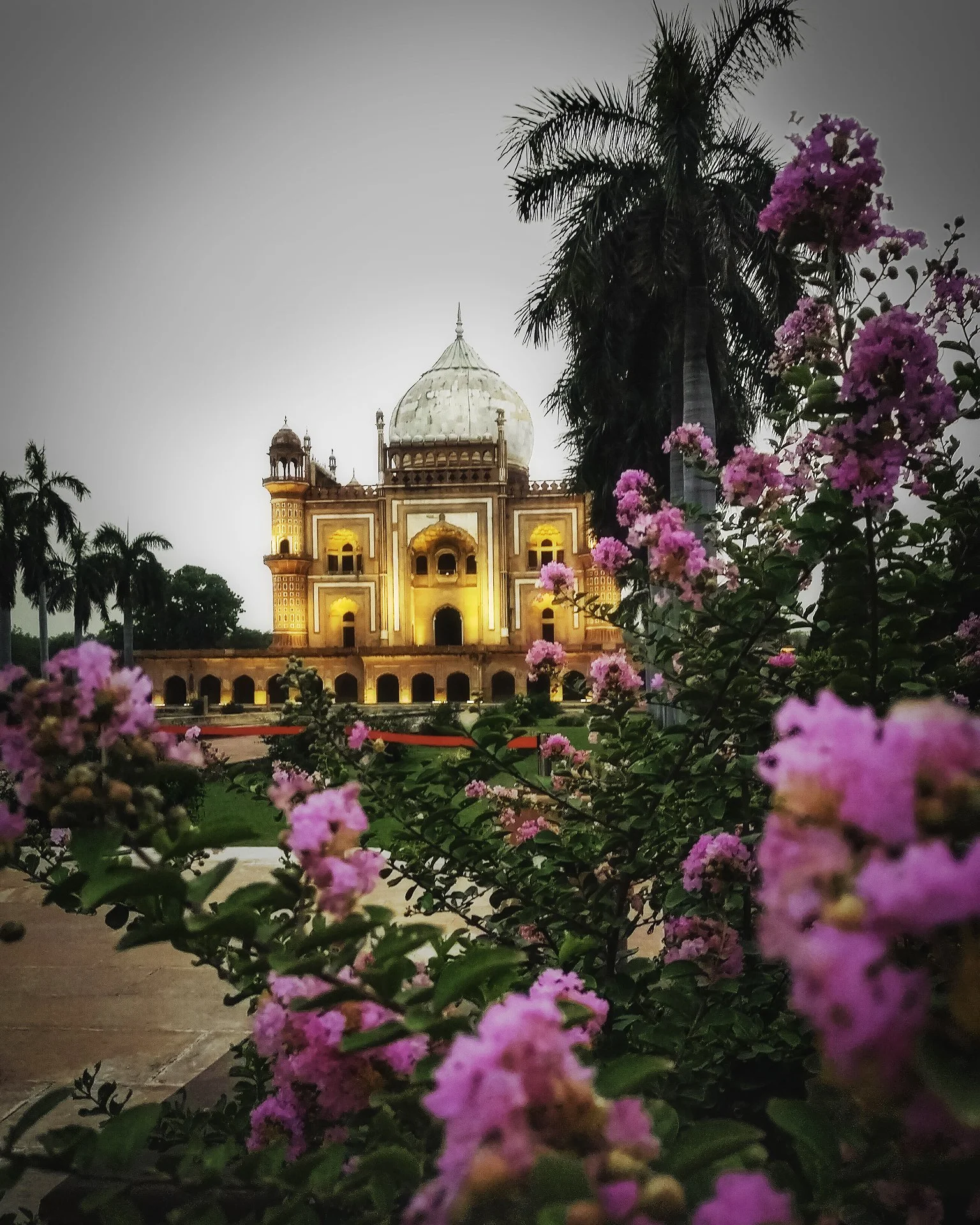
Our final monument was Safdarjung Tomb at evening. This last great Mughal garden tomb offered a masterclass in architectural photography ,geometric patterns, water features, dramatic archways. The winter afternoon light hit the red sandstone at perfect angles, casting long shadows and emphasizing details. By now, participants explored independently with confidence, understanding light, composition, and storytelling without constant direction. My role had shifted from teacher to collaborator.
The workshop concluded that evening.
On Day 8, participants departed Delhi carrying portfolios that reflected their individual visions of India's Golden Triangle..